theory
books
engineering
research and projects
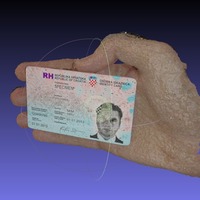
During my master's and time at Microblink, I researched Neural Radiance Fields (NeRF) that generate images of novel scene views. I built a model that generates personal document images, identified constraints for generating high-quality images, and quantified image quality in angle interpolation and extrapolation setups. I also developed segmentation mask generation via transfer learning with a goal to minimize required annotation data. Created an automated cropping method to isolate documents in space that reduces image artifacts.
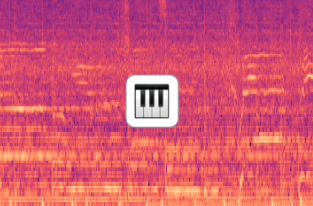
LUMEN Data Science is the largest ML competition in the Croatia that lasts 3 months. The goal was to create a model that labels 11 musical instruments from an input audio signal. We trained and developed a model in PyTorch using deep learning, digital signal processing, audio feature engineering, and spectrogram or image representations derived from raw audio. We won 2nd place and achieved 1st place in model performance.
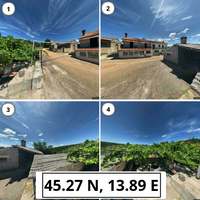
LUMEN Data Science is the largest ML competition in the Croatia that lasts 3 months. The goal was to build a computer vision model that predicts the geographic location from an image in a GeoGuessr-style setting. The model is trained on Croatia's Google Street View images. The model encodes and predicts either a class for a square region or latitude and longitude directly. We were the finalists in the competition and achieved 2nd place in model performance.
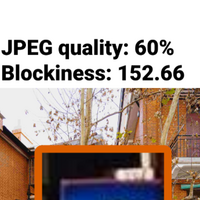
Implementation of a JPEG blockiness algorithm from the paper "A JPEG blocking artifact detector for image forensics." The implementation is based on gohtanii's implementation and improves it by writing operations in torch, vectorizing them, and supporting batched input. The higher the blockiness metric value, the more likely it is that the image was JPEG-compressed.
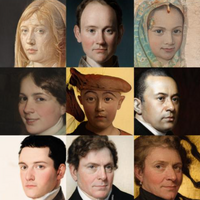
Projecting faces into StyleGAN2-ADA's latent space and finetuning on images of art from the MetFaces dataset. The project creates a projector of images into latent space, reconstructs the final image, ]and explores latent directions for changing concrete facial features. It also compares StyleGAN2 and StyleGAN2-ADA. Shout-out to @mirxonius who implemented ministyle-gan.
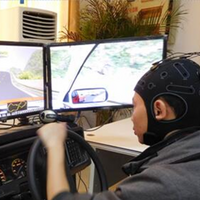
Implementation and of the paper "Driver fatigue detection through multiple entropy fusion analysis in an EEG-based system" with reproduction results. The pipeline applies filters on the signal, extracts multiple types of entropies and other features from 1 second epochs. Trained several models including SVM, neural network, KNN, and random forest and achieved better results than the paper's reported results.
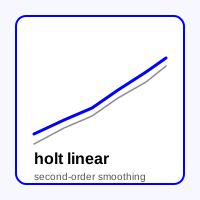
A small implementation of second-order exponential smoothing, also known as Holt linear. Used in TensorPix to estimate the ETA of a job time. The limitation is that the starting trends is 0.